When does the body become architecture?
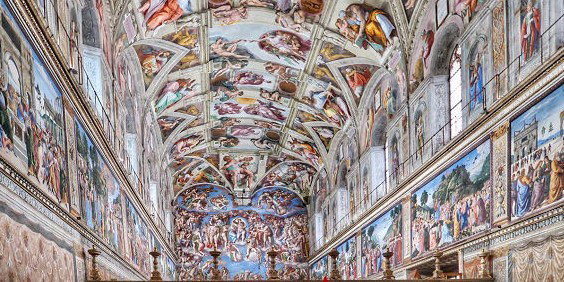
Michelangelo - Sistine Chapel Ceiling
The work of Michelangelo within the Sistine Chapel challenges the boundaries between painting, sculpture, and architecture. Rather than treating the ceiling as a flat surface, Michelangelo transforms it into an immersive spatial experience, where the human body becomes both structure and narrative.
He painted fresco "Creation of Adam" directly onto wet plaster, working section by section while positioning high on scaffolding he designed himself. Contrary to popular belief, much of the work was completed standing rather than lying down.
The Sistine Chapel Ceiling is one of the most recognisable images in art history, yet its power lies not only in its composition but in its placement. Positioned high above the viewer, the image demands a physical act of looking—forcing the body to tilt, stretch, and engage with the architecture itself. In this way, scale is not only visual but bodily.
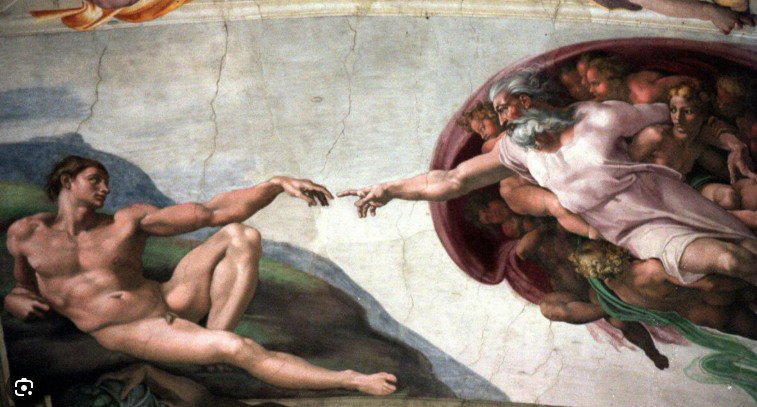
Figure 7. The Creation of Adam, Sistine Chapel ceiling by Michelangelo, Vatican City. Photographic reference from Vatican Museum official website, representing the relationship between body, architecture, and divine space. Image source: Vatican Museum website, 2026.
Gian Lorenzo Bernini - Ecstasy of Saint Teresa
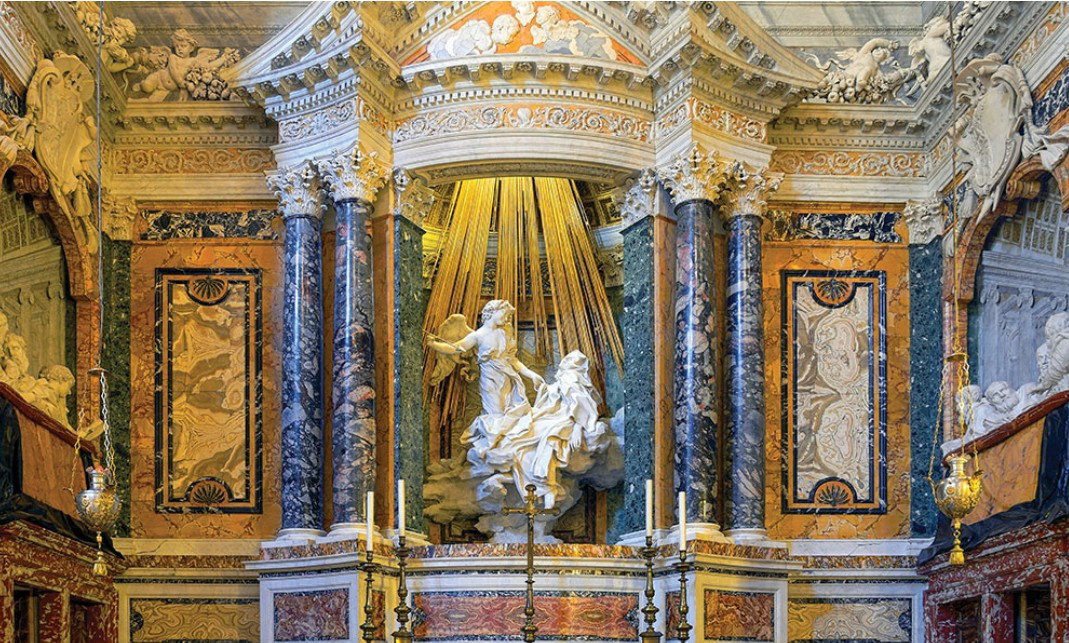
Figure 8. The Ecstasy of Saint Teresa by Gian Lorenzo Bernini, Cornaro Chapel, Rome, Italy. Photographic reference capturing theatrical lighting and sculptural staging within Baroque architecture. Image source: Wikipedia, 2026.
Many viewers think that Bernini's Ecstasy of Saint Teresa is only a single marble statue. In reality, he designed almost the entire Cornaro Chapel including architecture, coloured marbles, stucco, theatrical framing and lighting, making it closer to an immersive installation than an isolated sculpture.
In addition, one of Bernini's cleverest inventions and engineering designs is a concealed window above the sculpture that directs natural light onto Saint Teresa's gilded rays. He turns sunlight into a sculptural material.
Bernini created The Cornaro Chapel during a period when his papal influence had weakened after the death of his major patron. This commissions allowed him to reassert himself as a sculptor, architect, dramatist and designer of total environment.
Neither Michelangelo and Bernini simply made images of bodies. They built worlds around them. Whilst Michelangelo dramatically stretched bodies across a ceiling the latter engineered light, and devotion around magnificent marble.
Process: sculpture + architecture + light.
