How are Icons experienced, remembered and situated?

Architectural and sculptural icons are not shaped by artists alone. They are also constructed through philosophy, memory, film and place. This section expands Architecture of Icons beyond individual practitioners by examining how bodies experience space, how environments hold meaning, and how cultural sites influence interpretation.
Phenomenology and Embodied Experience
Maurice Merleau-Ponty's philosophy of phenomenology proposes that perception is inseparable from bodily experience. Space is not encountered as detached geometry but through movement, sensation, and lived interaction. This perspective becomes particularly relevant when examining works that engage the viewer physically and emotionally. Bernini's theatrical staging, James Turrell's natural monumentality, and Kapoor's reflective environments invite viewers to experience sculpture not only visually but through spatial encounter and embodied awareness.
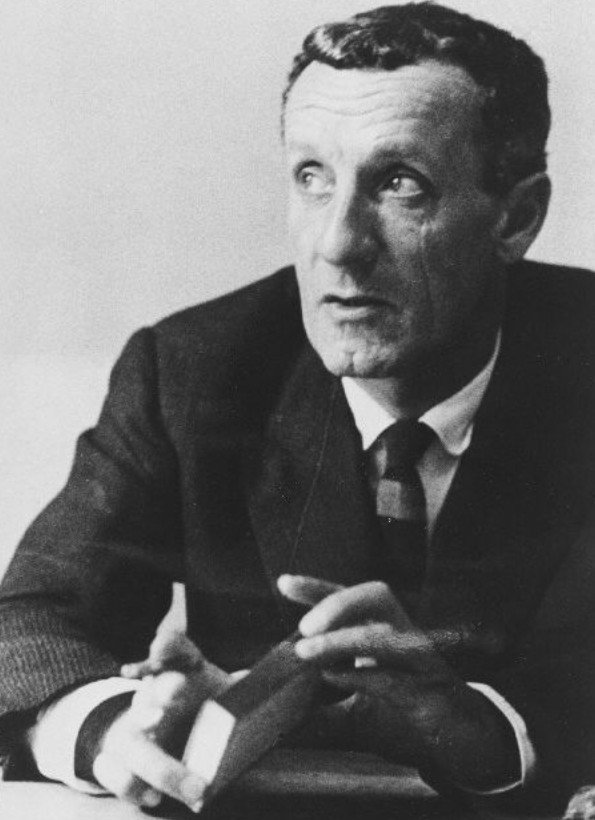
Portrait of Maurice Merleau-Ponty, sourced from Wikipedia, representing philosophical grounding for embodied perception and spatial experience. Image source: Wikipedia, 2026.
James Turrell - Roden Crater, in Painted Desert region of northern Arizona, USA
Can Perception Become Architecture?
James Turrell's Roden Crater transforms perception into architectural experience. Rather than constructing sculpture through solid material alone, he works with light, atmosphere and celestial observation, converting an extinct volcanic crater into a monumental environment for seeing. Carefully engineered chambers frame the sky, altering how light, depth, and colour are perceived. His work therefore exists not simply as architecture of land art, but as a phenomenological environment where perception itself becomes the medium.
Turrell's practice resonates strongly with Maurice Merleau-Ponty's philosophy of embodied experience, which proposes that space is understood through lived sensation rather than detached observation. Visitors do not merely look at the Roden Crater; they move through it, allowing changing light and atmosphere to shape their experience.
This project ultimately asks a compelling question central to Architecture of Icons: if an artwork is built through perception and encounter, where does architecture end and experience begin?
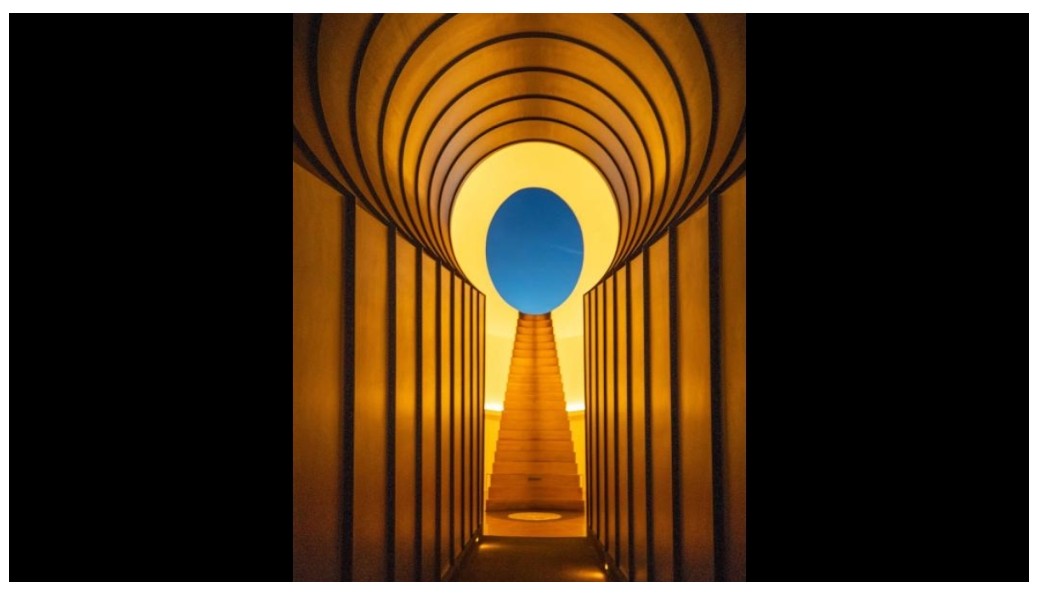
Roden Crater by James Turrell, photographic reference from Salt River Stories website, documenting light-based architectural environment and perceptual space. Photography by Florian Hozherr for Salt River Stories, 2026.